
4 Easy Steps to Reverse Any TikTok Video

4 Easy Steps to Reverse Any TikTok Video

$title$

TikTok, the popular short-form video-sharing platform, has taken the world by storm. With its vast array of creative and entertaining content, TikTok has captivated users of all ages. One of the platform’s most sought-after features is the ability to reverse videos. Whether you want to create unique and eye-catching content or simply add a touch of fun to your videos, reversing them can be a great way to enhance your TikTok experience. In this comprehensive guide, we will delve into the world of reversed videos on TikTok, exploring the creative possibilities and providing step-by-step instructions on how to achieve stunning reversed video effects.

The art of reversing videos on TikTok is a relatively simple yet highly effective technique that can transform ordinary videos into extraordinary ones. By manipulating the playback speed and direction of your videos, you can create captivating visual illusions and add an element of surprise and delight to your content. Reversed videos can be used for various purposes, from creating humorous skits to showcasing amazing stunts and transitions. The possibilities are endless, and with a little creativity, you can push the boundaries of TikTok content creation and captivate your audience.

Moreover, reversing videos on TikTok is incredibly easy. The platform provides an intuitive and user-friendly interface that makes it accessible to creators of all levels. Whether you are a seasoned TikTok pro or just starting your journey, you can quickly master the art of reversing videos and unlock a new realm of creative expression. So, if you are ready to take your TikTok content to the next level and create videos that will leave your followers mesmerized, follow along as we guide you through the step-by-step process of reversing videos on TikTok. Get ready to embrace the power of reversed videos and unleash your creativity like never before!

Download a Video Reverse App

To reverse a video on TikTok, you’ll need to download a video reverse app. There are many different apps available, both free and paid. Some popular options include:

  • Reverse Video (free)
  • Reverse Movie FX (free)
  • Video Reverse (paid)

Once you’ve downloaded an app, open it and select the video you want to reverse. The app will then process the video and create a reversed version. You can then save the reversed video to your phone or share it with others.

Tips for Choosing a Video Reverse App

When choosing a video reverse app, there are a few things to keep in mind:

1. Features: Some apps offer more features than others. For example, some apps allow you to control the speed of the reversed video, while others allow you to add effects. Consider the features that are important to you before choosing an app.

2. Price: Some video reverse apps are free, while others require a paid subscription. If you’re on a budget, you may want to choose a free app. However, paid apps often offer more features and better quality.

3. User reviews: Before downloading an app, be sure to read the user reviews. This will give you a good idea of the app’s quality and features.

Import the TikTok Video

To begin the video reversal process, you must first import the TikTok video you wish to edit. Follow these steps to import your video:

  1. Launch the TikTok mobile app and navigate to the “Discover” tab.

  2. Locate and select the TikTok video you want to reverse. Tap on the “Share” button.

  3. In the sharing menu, select the “Save video” option. The video will be saved to your device’s gallery.

2. Reverse the Video

Now that the TikTok video is imported onto your device, you can proceed with the video reversal process. Here are three methods you can use to reverse the TikTok video:

Method 1: Use the TikTok App

  1. Open the TikTok app and tap on the “+” icon to create a new video.

  2. Tap on the “Upload” button in the bottom-left corner and select the TikTok video you want to reverse.

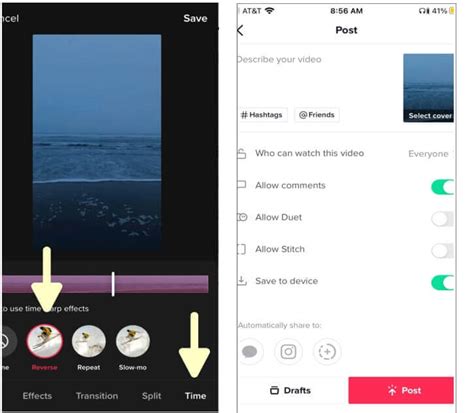
  3. After the video is uploaded, tap on the “Effects” button and select the “Time” tab.

  4. Use the slider to adjust the playback speed to “-1x” to reverse the video.

  5. Tap on the “Save” button to save the reversed video.

You can also change the duration of the reversed part. By default, the reversed part will be the full length of the video. To change the duration, follow these steps:

  1. Tap on the “Time” tab in the Effects menu.

  2. Use the slider to adjust the “Start Time” and “End Time” to set the duration of the reversed part.

Method 2: Use a Video Editing App

There are many video editing apps available that can be used to reverse videos, such as InShot, Video Editor & Maker, and Reverse Movie FX. These apps typically offer more advanced features and customization options compared to the TikTok app.

To reverse a video using a video editing app, follow these steps:

  1. Import the TikTok video into the video editing app.

  2. Look for the “Reverse” or “Time” option in the app.

  3. Select the “Reverse” or “Time” option and adjust the playback speed to “-1x” to reverse the video.

  4. Export or save the reversed video.

Method 3: Use a Desktop Video Editor

If you have a desktop computer, you can use a desktop video editor to reverse videos. Some popular desktop video editors include Adobe Premiere Pro, Final Cut Pro, and iMovie.

To reverse a video using a desktop video editor, follow these steps:

  1. Import the TikTok video into the desktop video editor.

  2. Right-click on the video clip in the timeline and select the “Speed/Duration” option.

  3. Adjust the playback speed to “-1x” to reverse the video.

  4. Export or save the reversed video.

Reverse the Video

There are several ways to reverse videos on TikTok. Here is a step-by-step guide on how to do it using the built-in editing features within the app:

Reverse a Video Using the Trim Feature

  1. Open the TikTok app and tap the “+” icon at the bottom of the screen to create a new video.
  2. Record or upload a video from your device.
  3. Once the video is uploaded, tap the “Edit” button on the bottom right corner.
  4. Select the “Trim” tool from the menu at the bottom of the screen.
  5. Move the sliders at the beginning and end of the video to select the portion you want to reverse.
  6. Tap the “Reverse” icon (a curved arrow pointing to the left) in the bottom right corner.
  7. Tap the “Save” button to apply the changes and save the reversed video.

Reverse a Video Using the Effects Feature

  1. Open the TikTok app and tap the “+” icon at the bottom of the screen to create a new video.
  2. Record or upload a video from your device.
  3. Once the video is uploaded, tap the “Effects” button on the left side of the screen.
  4. Scroll down and select the “Time” effect.
  5. Choose the “Reverse” option.
  6. Tap the “Save” button to apply the changes and save the reversed video.

Reverse a Video Using a Third-Party App

  1. Download a video editing app that supports video reversal, such as InShot or PowerDirector.
  2. Open the app and import the video you want to reverse.
  3. Locate the “Reverse” or “Time Reversal” feature within the app.
  4. Apply the effect to the video.
  5. Export the reversed video to your device.
App Features Price
InShot Trim, Reverse, Add Music, Filters Free (with in-app purchases)
PowerDirector Timeline Editing, Green Screen, Color Correction, 4K Export Paid subscription required

Save the Reversed Video

Follow these steps to save your reversed video:

  1. Once you’re satisfied with your reversed video, tap the “Share” button at the bottom right of the screen.

  2. In the sharing menu, select the “Save video” option.

  3. The video will be saved to your phone’s gallery.

  4. To share your reversed video on TikTok, simply tap the “Post” button and select TikTok as your sharing platform.

Additional Tips:

* You can also use a third-party app to reverse your videos.
* There are many different video editing apps available, so experiment to find one that you like.
* Once you’ve reversed your video, you can add music, filters, and other effects to make it even more creative.

Steps to Reverse a Video on TikTok

1. Record or Select a Video

Create a new video or choose an existing one from your gallery.

2. Open the Video Editing Page

Edit the video by tapping the “Edit” or “Adjust Clips” button.

3. Reverse the Video

Find the “Reverse” button in the editing panel. Tap on it to reverse the video direction.

4. Trim the Video (Optional)

If needed, adjust the start and end points of the reversed video using the trimming tool.

5. Import the Reversed Video into TikTok

After reversing the video, you can post it to TikTok by following these steps:

Steps Details
Choose “Post” Tap the “Post” button to upload the video.
Grant Permissions Allow TikTok to access your media files if prompted.
Add Description (Optional) Write a caption or description for the video if desired.
Hashtags and Effects Enhance the visibility of your video by using relevant hashtags and adding effects or filters.
Finalize Post Tap the “Post” button again to share the reversed video on TikTok.

Publish the Reversed Video

1. Once you’re satisfied with the reversed clip, tap the “Next” button.
2. Add a caption, hashtags, and any other desired options.
3. Select the “Post” button to share your reversed video on TikTok.

Viewing Your Reversed Video

1. After posting your video, it will be visible on your TikTok profile.
2. To view the reversed video, tap on the “Profile” icon at the bottom of the screen.
3. Find the reversed video in your feed and tap on it to watch.

Troubleshooting

If you encounter any issues while reversing a video on TikTok, try the following troubleshooting tips:

Problem Solution
The video doesn’t reverse Ensure that the video is not too long and meets TikTok’s duration limits. Try reducing the video’s length and try again.
The reversed video is distorted or pixelated Reduce the video’s resolution or use a lower quality compression setting to minimize distortion and pixelation.
The “Reverse” button is grayed out Make sure your app is up-to-date and check if the video format is supported by TikTok.

Duet with a Reversed Video

This method is a creative way to reverse a TikTok video by collaborating with another user. Here’s a step-by-step guide:

  1. Find a Reversed Video: Browse TikTok for reversed videos by using relevant hashtags like #reversevideo or #timewarp.
  2. Create a Duet: Tap the "Share" button on the reversed video and select "Duet."
  3. Record Your Video: Record your own video with the reversed video playing in the background.
  4. Turn on Green Screen Effect: Tap the "Effects" icon in the bottom left corner and select "Green Screen."
  5. Adjust Your Position: Drag and drop your video to align it with the reversed video.
  6. Record Your Reaction: Record yourself reacting to the reversed video, making sure to lip-sync or perform appropriate motions.
  7. Experiment with Timing and Effects: Play around with the timing of your reaction and apply creative effects like filters or transitions to enhance the overall experience. You can also use additional apps that offer video editing and reversing capabilities to refine your video further. Explore the various options and techniques to create unique and engaging content.

Use the Green Screen Feature with a Reversed Video

The Green Screen feature on TikTok allows you to replace the background of your video with any image or video you want. You can use this feature to create some creative and fun videos, such as reversing the direction of your video. To use the Green Screen feature with a reversed video, follow these steps:

1. Open the TikTok app and tap on the “+” icon to create a new video.
2. Tap on the “Effects” tab and scroll down to the “Green Screen” section.
3. Tap on the “Add” button and select the video you want to use as your background.
4. Tap on the “Invert” button to reverse the direction of your video.
5. Tap on the “Save” button to save your changes.
6. Tap on the “Next” button and add any additional effects or filters you want to use.
7. Tap on the “Post” button to share your video with the world.

Here are some additional tips for using the Green Screen feature with a reversed video:

Tip Description
Use a high-quality background video. This will help your video look more professional and polished.
Make sure your subject is well-lit. This will help your subject stand out from the background.
Use creative effects and filters. These can help you add some extra flair to your video.
Experiment with different settings. There are a lot of different settings available in the Green Screen feature, so don’t be afraid to experiment until you find the perfect look for your video.

Stitch with a Reversed Video

Want to add a reversed video to your TikTok stitch? Here’s a step-by-step guide:

  1. Open the TikTok app and go to the video you want to stitch.
  2. Tap the share button and select “Stitch.”
  3. Tap on “Select” and choose the reversed video from your camera roll.
  4. Adjust the trim and duration of the video as needed.
  5. Tap on “Next” and add a caption and hashtags.
  6. Tap on “Post” to share your stitch.

Additional tips:

  • Make sure the reversed video is short enough to fit within the time limit of a stitch (15 seconds).
  • Experiment with different transitions and effects to make your stitch stand out.
  • Use relevant tags to help people discover your stitch.
Quick Stitch Method How-to
1. Open the TikTok app. Locate the video you wish to stitch with.
2. Tap the share button. From the menu, select the “Stitch” option.
3. Choose the reversed video. Select the reversed video you want to add from your gallery.
4. Trim and adjust the video. Use the editing tools to trim and adjust the duration of the reversed video as desired.
5. Create your stitch. Add a caption, hashtags, and any other desired effects to complete your stitch.
6. Post your stitch. Share your stitch with the TikTok community by tapping the “Post” button.

Create a Series of Reversed Videos

1. Open the TikTok App

Launch the TikTok app on your smartphone and log in to your account.

2. Start Recording a Video

Tap the "+" icon at the bottom of the screen to start recording a new video. You can record up to 60 seconds of footage.

3. Reverse the Video

Once you have finished recording, tap the "Reverse" button at the top of the screen. This will reverse the order of the video clips in your recording.

4. Add Effects and Filters

You can now add effects and filters to your reversed video to enhance its visual appeal. To do this, tap the "Effects" and "Filters" tabs at the bottom of the screen.

5. Adjust the Speed

You can also adjust the speed of your reversed video. To do this, tap the "Speed" button at the bottom of the screen and select the desired speed.

6. Trim the Video

If you want to trim your reversed video, tap the "Trim" button at the bottom of the screen. This will allow you to select the portion of the video that you want to keep.

7. Add Music

You can add music to your reversed video by tapping the "Add Music" button at the bottom of the screen. This will allow you to browse the TikTok music library and select a song to add to your video.

8. Add Text and Stickers

You can also add text and stickers to your reversed video. To do this, tap the "Text" or "Stickers" buttons at the bottom of the screen.

9. Preview the Video

Once you are satisfied with your reversed video, tap the "Preview" button at the bottom of the screen to see how it will look when it is published.

10. Publish the Video

When you are ready to publish your reversed video, tap the "Publish" button at the bottom of the screen. This will upload your video to TikTok and make it available to your followers.

Step Action
1 Open the TikTok App
2 Start Recording a Video
3 Reverse the Video
4 Add Effects and Filters
5 Adjust the Speed
6 Trim the Video
7 Add Music
8 Add Text and Stickers
9 Preview the Video
10 Publish the Video

How to Reverse Video on TikTok

To give your TikTok videos a unique and engaging twist, you can easily reverse them. This can create visually stunning effects that make your content stand out. Here’s a step-by-step guide on how to reverse video on TikTok:

  1. Create or select a video you want to reverse.
  2. Tap the “Effects” icon on the left side of the screen.
  3. Scroll down and select the “Time” effect.
  4. Adjust the slider to the right to speed up the video and create a reverse effect.
  5. Tap the “Done” button to save your changes.

People Also Ask About How to Reverse Video on TikTok

1. Can I reverse audio on TikTok?

Yes, the Time effect also allows you to reverse the audio in your video. Simply adjust the slider to the right to achieve this effect.

2. How do I share my reversed TikTok video?

Once you have reversed your video, simply tap the “Next” button to post it like a regular TikTok video. You can also save it to your device or share it on other platforms.

3. Are there other ways to reverse videos for TikTok?

Yes, there are third-party apps and websites that allow you to reverse videos, such as Kapwing and Clideo. However, using TikTok’s built-in Time effect is the most convenient and straightforward method.

5 Easy Steps to Say “Seal” in French on TikTok

5 Easy Steps to Say “Seal” in French on TikTok

Are you ready to dive into the world of French language and culture? Let’s embark on a journey to uncover the intriguing world of French vocabulary. Today, we’re setting sail towards a specific destination: learning how to say “seal” in French. But this is not just a simple translation exercise; we’ll delve into the fascinating history and cultural significance of this marine mammal in France.

In the realm of French language, the term “seal” is expressed as “phoque”. This word originates from the Latin “phoca”, which itself stems from the Greek “phōkē”. Interestingly, the French word “phoque” has a broader meaning than its English counterpart, encompassing not only true seals but also sea lions and walruses. This linguistic nuance reflects the rich diversity of marine life that has graced the shores of France throughout history.

The presence of seals in French culture and history is evident in various domains. For instance, the iconic “Mona Lisa” painting by Leonardo da Vinci features a seal in the background. Additionally, the French coat of arms incorporates three fleurs-de-lis, which some scholars believe may have originated from the shape of a seal’s whiskers. Join us as we continue our voyage into the depths of French language and culture, where we will uncover more captivating stories and linguistic treasures.

Breaking Down the Phonetics of “Seal”

Phonetics is the study of speech sounds, and it can be a helpful tool for learning how to pronounce words in a new language. To break down the phonetics of “seal” in French, we can use the International Phonetic Alphabet (IPA). The IPA is a system of symbols that represents the sounds of human speech, and it can be used to transcribe any language in the world.

The IPA transcription of “seal” in French is /sɛl/. This means that the word is pronounced with the following sounds:

Phoneme Description
/s/ Voiceless alveolar fricative
/ɛ/ Mid front unrounded vowel
/l/ Voiced alveolar lateral approximant

The voiceless alveolar fricative /s/ is produced by placing the tip of your tongue behind your upper front teeth and blowing air through the narrow channel created between your tongue and the roof of your mouth. The mid front unrounded vowel /ɛ/ is produced by spreading your lips slightly and raising the middle of your tongue towards the roof of your mouth. The voiced alveolar lateral approximant /l/ is produced by placing the tip of your tongue against the roof of your mouth just behind your upper front teeth and allowing air to flow around the sides of your tongue.

The combination of these three sounds produces the word “seal” in French. It is important to note that the pronunciation of “seal” in French may vary depending on the region of France in which you are speaking. However, the IPA transcription provided above should give you a good starting point for pronouncing the word correctly.

Master the Perfect French Accent

Listen to Native Speakers

Immerse yourself in French by listening to native speakers. Pay attention to their pronunciation, intonation, and rhythm. You can find podcasts, videos, and movies in French to practice with.

Practice Regularly

Consistency is key when it comes to mastering the French accent. Set aside a small amount of time each day to practice the sounds of the language. You can use flashcards, read aloud from a book, or have conversations with a language partner.

Use French Language Resources

There are many resources available to help you improve your French accent. Dictionaries with phonetic transcriptions can provide you with the correct pronunciation of words. Online pronunciation guides and apps can also be useful.

Focus on Intonation and Rhythm

In addition to pronunciation, intonation and rhythm are essential for sounding natural in French. Pay attention to the pitch and volume of your voice, as well as the flow and pace of your speech.

Additional Tips for French Pronunciation

* Pronounce final consonants, even if they are silent in English.
* Roll the “r” sound and trill the “j” sound.
* Nasalize vowels when they are followed by a nasal consonant (e.g., “bon”).
* Link words together and avoid excessive pauses.
* Relax your jaw and lips to produce a more natural sound.

Unraveling the Etymology of “Seal”

Tracing the linguistic roots of the term “seal” leads us to a fascinating journey through multiple languages and historical contexts.

Proto-Indo-European Roots

The origins of “seal” can be traced back to the Proto-Indo-European root *kē- (“to cover, conceal”). This root gave rise to various words across Indo-European languages, such as the Latin “colo” (“I cultivate, I inhabit”) and the Greek “καλύπτω” (kaluptō, “I cover”).

Latin Derivation

From Proto-Indo-European, the word evolved into the Latin “sigillum,” which initially referred to a small image or mark. Over time, “sigillum” came to be used specifically for an official stamp or seal used to authenticate documents.

Old English Influence

The English word “seal” emerged from the Old English “seol,” which also meant “stamp” or “mark.” This term, in turn, was influenced by the Latin “sigillum.”

French Connection

The French word for “seal,” “sceau,” is derived directly from the Latin “sigillum.” It is pronounced as “soh” and retains the same general meaning of an official stamp or mark.

Modern Usage

In modern English, the term “seal” has expanded beyond its original meaning of a physical impression. It can now also refer to an official approval or endorsement, as in “a seal of approval.”

Expanding Your French Vocabulary with “Seal”

1. The Meaning of “Seal”

In French, the word “seal” has several meanings. It can refer to the marine mammal, a stamp or signet, or the act of sealing something.

2. Pronunciation of “Seal”

The French word “seal” is pronounced “so” (rhymes with “soak”).

3. Marine Mammal

In French, the marine mammal seal is called “le phoque” (plural: “les phoques”).

4. Stamp or Signet

When referring to a stamp or signet, “seal” is translated as “le sceau” (plural: “les sceaux”).

5. The Act of Sealing

The act of sealing something, such as a letter or a document, is translated as “le scellement” (plural: “les scellements”).

6. Related Vocabulary

Here are some related vocabulary terms associated with “seal”:

French English
Phoque moine Monk seal
Sceau royal Royal seal
Sceau de cire Wax seal

7. Idioms and Expressions

There are several idioms and expressions in French that use the word “seal”:

French English
Mettre le sceau To put the seal on something
Rompre les sceaux To break the seals

8. Literature and Culture

Seals have been featured in French literature and culture for centuries. One famous example is “The Seal of Solomon” by Charles Baudelaire.

9. Sealing Wax

In French, sealing wax is called “la cire à cacheter.” It is a type of wax used to create seals on letters and documents.

10. Figurative Meaning

In addition to its literal meanings, “seal” can also be used figuratively in French. For example, it can be used to describe something that is perfectly done or that is a perfect fit.

How to Say Seal in French

The French word for “seal” is “phoque”. It is pronounced as “fok”.

People also ask

How do you spell seal in French?

Seal is spelled “phoque” in French.

What is the plural of seal in French?

The plural of seal in French is “phoques”.

What is the feminine form of seal in French?

The feminine form of seal in French is “phoque femelle”.

5 Steps to Find Out Who Saved Your TikToks

5 Easy Steps to Say “Seal” in French on TikTok

Have you ever wondered who has saved your TikToks? Whether you’re a content creator or a casual user, it’s natural to be curious about who has found your videos interesting enough to save. While TikTok doesn’t have a built-in feature to directly view who saved your TikToks, there are some clever workarounds that can help you uncover this information.

First, you can check your TikTok analytics. If you have a Pro account, you’ll have access to insights about your videos, including the number of saves. While this won’t tell you who specifically saved your TikToks, it can give you a general idea of how many people have found them worth preserving.

Another way to see who saved your TikToks is through third-party apps. There are several apps available that allow you to track your TikTok analytics and see who has saved your videos. These apps typically require you to grant them access to your TikTok account, so it’s important to choose a reputable and trustworthy app. Once you’ve connected your account, you can use the app to view a list of users who have saved your TikToks. Some of these apps may also provide additional insights, such as the time and date when your videos were saved.

Checking Activity Log for Saved Tiktoks

TikTok’s activity log is a comprehensive record of your interactions within the app. To access your activity log:

  1. Open the TikTok app and sign in.
  2. Tap on your profile icon in the bottom right corner.
  3. Select the three horizontal lines in the top right corner.
  4. Tap on “Settings and privacy.”
  5. Scroll down and tap on “Privacy.”
  6. Tap on “Activity log.”

Your activity log will be displayed, showing you a chronological list of your recent actions on TikTok.

Saved Tiktoks

To view the Tiktoks that have been saved by other users, follow these steps:

1. Open your activity log.
2. Tap on the “Saved” tab.
3. This will display a list of all the Tiktoks that have been saved by other users.

The saved Tiktoks will be organized by date, with the most recent saves appearing at the top. You can tap on a saved Tiktok to view it.

Additional Information

Besides checking your activity log, you can also check your notifications to see who has saved your Tiktoks. When someone saves one of your Tiktoks, you will receive a notification in your inbox.

The following table summarizes the steps for checking your activity log and saved Tiktoks:

Step Action
1 Open the TikTok app and sign in.
2 Tap on your profile icon in the bottom right corner.
3 Select the three horizontal lines in the top right corner.
4 Tap on “Settings and privacy.”
5 Scroll down and tap on “Privacy.”
6 Tap on “Activity log.”
7 Tap on the “Saved” tab.

Maintaining Privacy and Control Over Saved Tiktoks

TikTok’s privacy settings allow you to control who can view your saved videos and keep your personal content secure. Here’s how to manage your privacy:

Viewing Saved Videos on TikTok

Open the TikTok app and tap the “Profile” icon in the bottom right corner of the screen. Then, tap the “Saved” tab to view all of your saved videos.

Making Saved Videos Private

If you want to make a saved video private, tap on the three dots in the bottom right corner of the video. Then, select “Privacy Settings” and choose “Private” from the options.

Sharing Saved Videos with Others

You can share your saved videos with others by tapping on the three dots in the bottom right corner of the video and selecting “Share.” Then, choose the platform or method you want to use to share the video.

Downloading Saved Videos

You can download your saved videos to your device by tapping on the three dots in the bottom right corner of the video and selecting “Save Video.” The video will be downloaded to your device’s camera roll.

Deleting Saved Videos

If you want to delete a saved video, tap on the three dots in the bottom right corner of the video and select “Delete.” The video will be permanently deleted from your Saved tab.

Managing Notifications from TikTok

TikTok sends notifications when someone likes, comments, or shares your saved videos. You can manage these notifications in the app’s settings.

Controlling Who Can View Your Saved Videos

You can control who can view your saved videos by adjusting your privacy settings. In the “Who can view your Saved videos” section, you can choose to make your saved videos private, visible to your followers, or visible to everyone.

Reporting Saved Videos

If you find a saved video that violates TikTok’s community guidelines, you can report it by tapping on the three dots in the bottom right corner of the video and selecting “Report.” TikTok will review the video and take appropriate action.

Limitations of TikTok’s Privacy Settings

It’s important to note that TikTok’s privacy settings may not be completely foolproof. If you share a saved video with someone who you later block, they may still be able to view the video. Additionally, if you share a saved video with someone who takes a screenshot or screen recording, they will have a permanent copy of the video.

Please check TikTok’s privacy policy for more information about how your data is used and protected.

How To See Who Saved Your Tiktoks

As of right now, there is no way to see who has saved your Tiktoks. This is because TikTok does not have a feature that allows users to track who has saved their videos.

However, there are some workarounds that you can use to get an idea of who might have saved your Tiktoks. For example, you can check your TikTok analytics to see which videos have been viewed the most. This can give you an idea of which videos are most popular and, therefore, most likely to have been saved.

You can also check your TikTok notifications to see if anyone has commented on or shared your videos. This can give you an idea of who is interested in your content and, therefore, more likely to have saved it.

Ultimately, there is no surefire way to see who has saved your Tiktoks. However, by using the workarounds described above, you can get a good idea of who might have saved your videos.

People Also Ask

Can I see who saved my Tiktoks?

No, there is no way to see who has saved your Tiktoks.

How can I get an idea of who might have saved my Tiktoks?

You can check your TikTok analytics to see which videos have been viewed the most. You can also check your TikTok notifications to see if anyone has commented on or shared your videos.

Is there a way to prevent people from saving my Tiktoks?

No, there is no way to prevent people from saving your Tiktoks.

5 Simple Steps on How to Put TikTok on Auto Scroll

5 Easy Steps to Say “Seal” in French on TikTok

Have you ever found yourself endlessly scrolling through TikTok, losing track of time as video after video captivates your attention? If so, you’re not alone. The app’s algorithm is designed to keep users engaged for hours on end. But what if you want to take a break from actively scrolling and let the videos come to you? That’s where the auto-scroll feature comes in. With this feature enabled, TikTok will automatically play and scroll through videos without any input from you. It’s the perfect way to sit back, relax, and enjoy the endless stream of content that TikTok has to offer.

To enable auto-scroll, simply tap on the three dots in the bottom-right corner of the screen and select “Settings and privacy.” From there, tap on “Accessibility” and toggle on the “Auto-scroll” option. Once enabled, TikTok will start automatically playing and scrolling through videos as soon as you open the app. You can adjust the speed of the scrolling by tapping on the “Speed” option in the Settings menu. You can also choose to have TikTok pause the scrolling when you start watching a video.

The auto-scroll feature is a great way to save time and effort while browsing TikTok. It’s also a great way to discover new content that you might not have otherwise found. So next time you’re looking to relax and enjoy TikTok without having to lift a finger, be sure to enable the auto-scroll feature.

How To Put Tiktok On Auto Scroll

TikTok is a popular social media app that allows users to create and share short videos. The app has a feature called “Auto Scroll” that allows users to scroll through videos automatically without having to manually swipe up. This feature can be useful for users who want to watch videos hands-free or who want to quickly browse through a large number of videos.

To turn on Auto Scroll, open the TikTok app and tap on the “Me” tab. Then, tap on the three dots in the top right corner of the screen and select “Settings.” Under the “General” section, toggle the “Auto Scroll” switch to the on position.

Once Auto Scroll is turned on, videos will automatically scroll up on the screen. You can pause the scrolling by tapping on the video or by swiping up or down on the screen.

People Also Ask

Why is my TikTok not auto scrolling?

There are several possible reasons why your TikTok may not be auto-scrolling. Here are a few things to check:

  • First, make sure to check the Auto Scroll feature in the Settings menu. It may be disabled or turned off by mistake.
  • Second, try ensuring that your TikTok app is up-to-date. Older versions of the app may not have the Auto Scroll feature.
  • Third, check the internet connection, as a slow or unstable internet connection can affect the app’s functionality, including the Auto Scroll feature.

Can you put TikTok on autoplay?

Yes, you can put TikTok on autoplay. Here’s how to do it:

  • Open TikTok and select the video you wish to watch.
  • Next, tap on the three dots located on the right-hand side of the screen.
  • Choose “Autoplay” from the menu that appears, and the videos will begin playing automatically.

6 Simple Steps to Share TikTok Videos Efficiently

5 Easy Steps to Say “Seal” in French on TikTok

In the realm of social media, where content reigns supreme, sharing captivating videos has become an integral part of our digital interactions. Among the myriad platforms that have revolutionized video sharing, TikTok stands out with its engaging short-form format. However, if you’ve been yearning to share TikTok videos without their accompanying titles, you’re not alone. This comprehensive guide will delve into the various methods you can employ to effortlessly share your favorite TikTok creations, sans captions.

Firstly, let’s explore the native TikTok option. When viewing a video you wish to share, simply tap the “Share” button located below the video. From the available options, select “Copy Link.” This will save the video’s URL to your clipboard. You can then paste this link into any messaging or social media platform, allowing your recipients to access the video directly without the title. However, it’s important to note that this method will only work if the video’s privacy settings allow for sharing.

Alternatively, if you prefer to download the video and share it as a file, TikTok offers a convenient option for that as well. Tap the “Share” button, then select “Save Video.” Once the video has been saved to your device, you can share it via any file-sharing method you prefer, such as email, messaging apps, or cloud storage services. This method grants you more control over the video’s distribution and allows you to share it even if the original creator’s privacy settings restrict direct sharing.

Unveiling the Secret: Sharing TikTok Videos with Ease

Effortlessly Sharing TikTok Videos: Unveiling the Simple Steps

TikTok has revolutionized the way we create, share, and consume short-form videos. With its captivating content and user-friendly interface, it’s no wonder that the platform has become a global phenomenon. However, if you’re new to TikTok or want to expand your video-sharing prowess, navigating the ins and outs of sharing videos can be daunting.

To help you become a TikTok-sharing pro, here’s a comprehensive guide to effortlessly sharing TikTok videos:

1. Getting to Know the Basics: Essential Tips for Sharing TikTok Videos

Before delving into the specifics, let’s establish some fundamental guidelines for seamless TikTok video sharing:

  • Ensure Your Video Is Complete: Before sharing, double-check that your video is finished, edited, and ready to be unveiled to the world.
  • Craft a Captivating Caption: A compelling caption can draw attention to your video and encourage viewers to engage.
  • Use Relevant Hashtags: Hashtags are key to expanding the reach of your videos. Use popular and relevant hashtags to increase visibility.
  • Consider Cross-Platform Sharing: Extend your TikTok content to other social media platforms to maximize your audience.
Platform Sharing Method
Instagram Reels Save your video and upload it to Reels
Facebook Share the TikTok link or download and post the video
Twitter Share the TikTok link or download and upload the video

How to Share TikTok Videos on Other Social Media Platforms

Sharing your TikTok videos on other social media platforms is a great way to expand your reach and connect with a wider audience. Here’s how to do it:

1. Find the Video You Want to Share

Open the TikTok app and find the video you want to share. Tap the share icon (the arrow pointing up and to the right) located at the bottom right corner of the video.

2. Choose the Social Media Platform

A menu will appear showing a list of social media platforms where you can share the video. Tap on the platform you want to use. If the platform is not listed, you may need to scroll down to find it.

Additional Details for Step 2:

Sharing on Instagram:

  1. If you want to share the video as a post, select “Feed” or “Story”.
  2. For Instagram Stories, you can choose to share the video as a standard story or add it to a Highlight.
  3. Customize your post with a caption and hashtags before sharing.

Sharing on Facebook:

  1. Select “News Feed” to share the video directly to your timeline.
  2. Alternatively, you can share it to a specific group or page by selecting “Groups” or “Pages”.
  3. Add a caption and any relevant information before hitting “Post”.

Mastering the Art of Cross-Platform Sharing

1. Understanding Cross-Platform Capabilities

TikTok allows you to share videos across various platforms, including Instagram, Facebook, WhatsApp, and Twitter. Each platform has unique video formats and sharing options. Understanding the specific requirements and limitations of each platform is crucial for effective sharing. Ensure your videos adhere to the appropriate aspect ratios, resolutions, and file sizes to optimize their visibility and engagement.

2. Exploring Native Sharing Options

TikTok provides native sharing options within the app. Select the “Share” button on the video you want to share. You will see a list of available platforms. Tap on the desired platform and follow the prompts. TikTok will automatically format the video according to the platform’s specifications. This is the most convenient and quickest way to share TikTok videos across different platforms.

3. Utilizing Third-Party Tools for Enhanced Sharing

There are numerous third-party tools available that can enhance the cross-platform sharing capabilities of TikTok. These tools offer additional features such as:

Tool Features
Zapier Connects TikTok to other platforms, automating the sharing process.
Buffer Schedules TikTok videos for sharing across multiple platforms at optimal times.
Hootsuite Manages multiple social media accounts, including TikTok, and allows for bulk scheduling and performance tracking.

Third-party tools provide advanced sharing options, enabling you to customize your sharing strategies, save time, and increase the reach and engagement of your TikTok content.

Spread the TikTok Love: Share Videos via Messaging Apps

Unleashing the viral power of TikTok made it easy to share captivating videos with friends and family. One of the simplest ways to spread the TikTok love is through using messaging apps, allowing you to share laughter, inspiration, and joy in a matter of seconds.

WhatsApp

Share your favorite TikTok clips with your WhatsApp buddies by utilizing the built-in share button. Simply navigate to the desired TikTok video, tap the share icon, and select WhatsApp. You’ll have the option to send the clip directly to a specific contact or add it to a group chat.

Messenger

Engage your Messenger buddies with awesome TikTok videos. Tap the share icon, choose Messenger, and enjoy the seamless sharing experience. Send a private message to a friend or spark a conversation in a group chat, effortlessly sharing the latest TikTok sensation.

iMessage

Send TikTok videos to fellow iPhone users via iMessage. Tap the share icon, select iMessage, and choose a contact or group chat. You can even add a personal touch by adding a caption or emoji before hitting send.

Other Messaging Apps

Share TikTok videos via other popular messaging apps such as Telegram, Viber, and Signal. The process is similar to the other mentioned apps. Locate the share icon, select the messaging app, and share the video with ease. Spread the TikTok joy and connect with your contacts through laughter and entertainment.

Messaging App Sharing Method
WhatsApp Share button > WhatsApp > Contact/Group
Messenger Share button > Messenger > Contact/Group
iMessage Share button > iMessage > Contact/Group
Other Apps Share button > Select Messaging App > Contact/Group

Engage Your Audience: Share TikTok Videos on Your Website

1. **Embed TikTok Videos:**
Copy the video’s embed code and paste it into your website’s HTML to seamlessly integrate it into your content.

2. **Create a Dedicated TikTok Page:**
Establish a dedicated page on your website to showcase your TikTok videos, providing easy access for visitors.

3. **Use Social Media Buttons:**
Implement social media buttons on your website to encourage visitors to share your TikTok videos on their own platforms.

4. **Run TikTok Ad Campaigns:**
Utilize TikTok’s advertising platform to reach a targeted audience and drive traffic to your website.

5. Leverage TikTok Analytics

Monitor the performance of your TikTok videos on your website using analytics tools provided by TikTok. Track engagement metrics like views, likes, and comments to gain insights into what resonates with your audience. Fine-tune your strategy based on these data points and optimize your video content for maximum impact.

Metric Description
Views Number of times your video has been played
Likes Number of users who liked your video
Comments Number of comments left on your video
Shares Number of times your video has been shared

The Power of Embedding: Enhance Your Content with TikTok Videos

Engage Your Audience with Immersive Content

By embedding TikTok videos into your website or blog, you can elevate your content and engage your audience in a captivating way. The visually appealing and dynamic nature of TikTok videos adds an extra dimension to your writing, making it more impactful and memorable.

Increase Dwell Time and Page Views

The captivating nature of TikTok videos encourages visitors to stay longer on your pages and explore more of your content. By providing engaging and shareable videos, you can increase dwell time and boost page views, leading to improved SEO rankings and overall user experience.

Drive Traffic to Your TikTok Profile

Embedded TikTok videos act as a traffic driver, directing visitors directly to your TikTok profile. By showcasing your best content on your website or blog, you can entice your audience to follow you on TikTok and engage with your videos directly.

Showcase Products and Services

For e-commerce businesses and brands, embedding TikTok videos can be an effective way to showcase your products or services. Short, visually appealing videos that highlight key features and benefits can drive sales and improve conversion rates.

Foster Community and Interaction

By embedding TikTok videos, you can create a sense of community and foster interaction among your audience. The comment section below embedded videos provides a space for viewers to share their thoughts, questions, and reactions, fostering a sense of connection and engagement.

Enhance Your Story with Authentic Content

User-generated TikTok videos offer a unique perspective and a sense of authenticity that can enhance your storytelling. By embedding these videos, you can incorporate real-world experiences and showcase how your brand or products connect with your audience. This human element adds credibility and builds trust with your visitors.

Benefits of Embedding TikTok Videos

Benefit Effect
Increased engagement Captivating videos keep visitors interested
Higher dwell time and page views Engaging content reduces bounce rates
Traffic to TikTok profile Embedded videos act as teasers
Product/service promotion Highlight features and drive sales
Community building Comments foster interaction and connection
Authenticity and credibility User-generated videos showcase real-world experiences

Leverage Email Marketing: Share TikTok Content in Email Campaigns

Email marketing remains a powerful channel for reaching your audience. By incorporating TikTok content into your email campaigns, you can engage subscribers, drive traffic to your TikTok account, and strengthen your brand presence across multiple platforms.

Here are 7 effective strategies for sharing TikTok videos in email campaigns:

1. **Create Exclusive Content:** Produce unique and engaging TikTok videos specifically for your email subscribers. This could include behind-the-scenes footage, special announcements, or exclusive product demonstrations.

2. **Embed Videos Directly:** Use the “Embed Code” feature on TikTok to generate an HTML code that you can embed directly into your emails. This allows subscribers to watch the videos without leaving their inbox.

3. **Use Animated GIFs:** If you can’t embed videos, consider using animated GIFs to capture the attention of subscribers. GIFs can showcase a snippet of your TikTok video and encourage recipients to click for the full version.

4. **Provide a Call-to-Action:** Include a clear call-to-action in your emails, inviting subscribers to visit your TikTok profile or watch a specific video. Use strong verbs and specific instructions.

5. **Personalize Content:** Segment your email list and tailor the TikTok videos you share based on their preferences and interests. This ensures that your content is relevant and engaging for each subscriber.

6. **Track Your Results:** Use email analytics to monitor the performance of your TikTok-sharing campaigns. Track metrics such as open rates, click-through rates, and video views to optimize your strategy and improve future campaigns.

7. **Collaborate with Influencers:** Partner with TikTok influencers to create exclusive content that resonates with your target audience. Leverage their reach and credibility to amplify your message and reach a wider audience.

Strategy Benefits
Create Exclusive Content Engages subscribers and provides unique value
Embed Videos Directly Provides seamless video experience within the email
Use Animated GIFs Captures attention and encourages click-throughs
Provide a Call-to-Action Drives traffic to your TikTok profile and videos
Personalize Content Ensures relevance and engagement
Track Your Results Allows for optimization and improvement
Collaborate with Influencers Amplifies reach and credibility

Boost Your Reach: Use QR Codes to Share TikTok Videos Offline

QR codes are a convenient and effective way to share TikTok videos offline. By creating a QR code for your video, you can easily make it available to anyone with a smartphone. Here’s a step-by-step guide on how to use QR codes to share TikTok videos offline:

1. Create a QR Code

Visit a QR code generator website or use a QR code generation app on your smartphone. Input the URL of the TikTok video you want to share in the designated field.

2. Customize Your QR Code (Optional)

Most QR code generators allow you to customize the appearance of your code. You can add a logo, change the colors, or add a frame to match your brand or aesthetic.

3. Download Your QR Code

Once you’re satisfied with the design of your QR code, download it in the desired format (e.g., PNG, SVG). Save the QR code file to your computer or smartphone.

4. Print or Display Your QR Code

To share your TikTok video offline, print the QR code on flyers, posters, business cards, or any other physical material. You can also display the QR code on your website, social media pages, or in your store.

5. Promote Your QR Code

Promote your QR code through various channels such as social media, email marketing, or print advertising. Encourage people to scan the code to access your TikTok video.

6. Track Your Results

If possible, use a QR code tracking service to monitor the number of scans and track the success of your offline sharing campaign.

Collaborate and Share: Partner with Brands or Influencers

When it comes to maximizing your reach, partnering with brands or influencers can be a powerful move. Here’s a step-by-step guide on how to collaborate effectively:

1. Identify Targeted Partners

Start by researching brands or influencers aligned with your niche and target audience. Look for those with a strong online presence and a following that overlaps with yours.

2. Craft a Compelling Proposal

Contact the potential partner with a clear and concise proposal outlining your collaboration vision. Highlight your strengths, value proposition, and the benefits they’ll gain from working with you.

3. Negotiate Terms

Once a partnership is established, it’s crucial to negotiate terms that suit both parties. This includes details such as compensation, content guidelines, and cross-promotion strategies.

4. Plan Content and Promotion

Collaborate with your partner to develop engaging content that resonates with both your audiences. Schedule cross-promotion activities to maximize reach, such as sharing each other’s content or hosting joint giveaways.

5. Measure Results

Track the performance of your collaborative videos by monitoring metrics like views, engagement, and conversions. Analyze the data to identify areas for improvement and tweak your strategy accordingly.

Maximize Exposure: Share TikTok Videos on Paid Advertising Campaigns

1. Identify Your Target Audience

Target your ads to users who are most likely to engage with your content. Consider demographics, interests, and behaviors.

2. Choose the Right Ad Format

TikTok offers various ad formats, such as in-feed videos, branded effects, and branded challenges. Select the format that best aligns with your campaign objectives.

3. Create Compelling Ad Copy

Craft concise and engaging ad copy that captures attention and entices users to click. Use clear calls-to-action.

4. Set a Budget and Bid Strategy

Establish a budget that aligns with your campaign goals and consider using bid strategies to optimize your ad performance.

5. Test and Track Your Results

Monitor your ad performance metrics and make adjustments as needed. Testing different ad variations can help improve results.

6. Leverage Influencers

Collaborate with TikTok influencers to reach a wider audience and boost credibility. Ensure their content aligns with your brand image.

7. Run Contests and Giveaways

Host contests or giveaways on TikTok to generate excitement and encourage user participation. Offer prizes that are relevant to your target audience.

8. Utilize User-Generated Content

Encourage users to create and share their own TikTok videos using your branded hashtag or challenge. This can amplify your reach and foster community engagement.

9. Partner with Other Brands

Cross-promote with other brands on TikTok to tap into their audience and expand your reach. Ensure there is synergy between your brands.

10. Track Key Performance Indicators (KPIs)

Establish relevant KPIs to measure the success of your paid advertising campaigns. Metrics to track include video views, engagement rates, and conversions. Monitor these KPIs regularly and adjust your strategy accordingly.

Collaboration Type

Pros Cons
Brand Partnerships Access to wider audience, increased credibility, Potential for promotional content to feel inauthentic,
Influencer Partnerships Authenticity, targeted reach, personal connection, Higher cost, lack of control over content,
KPI Description
Video Views The number of times your video is played
Engagement Rates The percentage of users who interact with your video (e.g., likes, comments, shares)
Conversions The number of actions users take after viewing your video (e.g., website visits, downloads)

How To Share Tiktok Videos

TikTok is a popular social media platform that allows users to create and share short videos. Videos can be shared directly through the app, or they can be downloaded and shared on other platforms.

To share a video on TikTok, simply tap on the share button located below the video. You will then be given a number of options for sharing, including:

  • Share to your news feed
  • Share to a specific friend or group
  • Share to another app
  • Download the video

You can also share videos by copying the link to the video and pasting it into another app or website.

People Also Ask

How do I share a TikTok video to Instagram?

To share a TikTok video to Instagram, you must first download the video from TikTok to your device. To do this, click the share button on the video and select the download icon. Once the video is downloaded to your device, you can open Instagram and click the + button to create a new post. Click on the gallery icon to select the video from your device, and then add a caption and hashtags. Click share to post the video to Instagram.

How do I share a TikTok video to Facebook?

To share a TikTok video to Facebook, you must first download the video from TikTok to your device. To do this, click the share button on the video and select the download icon. Once the video is downloaded to your device, you can open the Facebook app and click on the photo/video icon to create a new post. Click on the gallery icon to select the video from your device, and then add a caption and hashtags. Click share to post the video to Facebook.

5 Easy Steps to Create Playlists on TikTok

5 Easy Steps to Say “Seal” in French on TikTok
$title$

In the realm of social media, TikTok has emerged as a vibrant platform where users can engage with captivating short-form videos. Amidst its myriad features, the ability to create and share playlists has gained immense popularity, enabling users to curate a curated collection of their favorite videos. Whether you’re an aspiring content creator or simply a music enthusiast seeking a personalized listening experience, mastering the art of playlist creation on TikTok is essential for maximizing your enjoyment and engagement on the platform.

Creating a playlist on TikTok is a straightforward yet rewarding process. To embark on this journey, simply navigate to the ‘Discover’ tab within the app and tap on the ‘Playlists’ section. From here, you’ll be presented with a comprehensive library of playlists meticulously crafted by fellow users, covering diverse genres, themes, and moods. Alternatively, you can choose to create your own playlist by clicking the ‘Create Playlist’ button. This action will bring you to a blank canvas, upon which you can unleash your creativity and assemble a playlist that truly reflects your unique taste.

Once you’ve embarked on the path of playlist creation, you’ll have the opportunity to personalize your playlist with a captivating title, a brief description, and a carefully selected thumbnail. These elements serve as the gateway to your playlist, enticing potential listeners and providing a glimpse into the treasures that await them within. When choosing the videos to include in your playlist, it’s essential to curate a cohesive collection that flows seamlessly from one video to the next. Consider the overall theme, mood, or genre of your playlist and select videos that complement each other, creating a harmonious listening experience that will keep your audience engaged.

How to Make Playlists on Tiktok

Tiktok is a popular social media platform where users can create and share short videos. One of the features that makes Tiktok unique is the ability to create and share playlists. Playlists can be used to organize videos on a variety of topics, such as music, cooking, fashion, and travel. To make a playlist on Tiktok, follow these steps:

  1. Open the Tiktok app and tap on the “Me” icon in the bottom right corner.
  2. Tap on the “Playlists” tab.
  3. Tap on the “Create New Playlist” button.
  4. Enter a name for your playlist and tap on the “Create” button.
  5. To add videos to your playlist, tap on the “Add Videos” button and select the videos you want to add.
  6. Once you have added all of the videos you want to your playlist, tap on the “Done” button.

Your playlist will now be visible on your profile page. You can share your playlist with other users by tapping on the “Share” button.

People Also Ask About How To Make Playlists On Tiktok

How do I add videos to a playlist?

To add videos to a playlist, tap on the “Add Videos” button and select the videos you want to add. You can add up to 50 videos to a playlist.

How do I share a playlist?

To share a playlist, tap on the “Share” button. You can share your playlist with other users via social media, email, or text message.

How do I delete a playlist?

To delete a playlist, tap on the “Edit” button and then tap on the “Delete” button.